


 Please expect a free call back
PCOS Management with Ayurveda
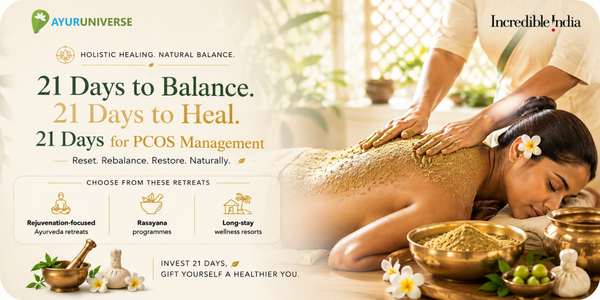
PCOS
Management with Ayurveda: A Holistic Journey Towards Better Reproductive Health
Polycystic Ovary Syndrome, better known as PCOS, is one of the most
common hormone imbalance conditions affecting women of reproductive age. Despite
how common it is, the experience of PCOS can vary from one woman to another.
For some, it may mean irregular or missed periods. For others,
persistent acne, excess facial or body hair, thinning scalp hair, difficulty
conceiving or changes in body weight may be the first signs. PCOS is also
associated with metabolic concerns such as insulin resistance and an increased
risk of conditions including type 2 diabetes and high blood pressure.
Here is an important misconception worth addressing:
Ovarian cysts does NOT occur in all PCOS conditions.
The name can be misleading. Small follicles may appear on the
ovaries during an ultrasound, but their presence is not essential for a
diagnosis. PCOS is a complex condition involving reproductive, hormonal and
metabolic health.
That complexity is precisely why managing PCOS is rarely about
finding one magic diet, one exercise routine or one herbal remedy.
It is about understanding your individual pattern and
creating a sustainable plan around it.
PCOS: More Than
Irregular Periods
PCOS
can affect the body in several interconnected ways.
Common
features include:
·
Irregular, infrequent or absent
periods
·
Irregular ovulation
·
Excess androgen activity, which
may contribute to acne or unwanted facial and body hair
·
Thinning of scalp hair
·
Changes in weight or difficulty
managing weight
·
Difficulty conceiving because
ovulation may be irregular
·
Metabolic concerns, including
insulin resistance
Some
women may have several of these features, while others may have only a few.
Some may not even realize they have PCOS until they experience difficulty
conceiving or another health concern prompts an evaluation.
This
is why PCOS management should begin with proper assessment rather than
assumptions.
PCOS Does Need
Long-Term Attention
PCOS
isn’t simply about periods, skin or fertility.
Because
of its metabolic and hormonal associations, women with PCOS may have a higher
risk of developing health concerns such as type 2 diabetes, high blood
pressure, cardiovascular disease and problems affecting the uterine lining.
Sleep disorders, anxiety and depression can also be part of the wider picture.
This
doesn’t mean that every woman with PCOS will develop these conditions.
It
means that PCOS deserves to be managed as a whole-person health concern,
rather than focusing only on whichever symptom happens to be most visible.
And
that is where lifestyle becomes an important part of the conversation.
What Does
Conventional PCOS Management Involve?
There
is no single treatment that works for every woman with PCOS.
Management
depends on symptoms, overall health and, importantly, whether pregnancy is
currently desired.
Depending
on the individual, conventional care may include lifestyle intervention,
hormonal contraception for cycle management, medicines such as metformin,
treatments for androgen-related symptoms, or fertility treatments to support
ovulation.
Lifestyle
management is considered a core component of PCOS care. Current international
guidelines recommend healthy eating and physical activity for women with PCOS,
with goals tailored to individual preferences and circumstances. Importantly,
the benefits of a healthy lifestyle are not dependent entirely on weight loss.
There
is also no evidence that one particular diet composition is universally
superior for PCOS.
In
other words, the best approach is one that is nutritionally sound,
sustainable and suited to the individual woman.
This
emphasis on personalization creates an interesting space for Ayurveda.
Where Can
Ayurveda Fit Into PCOS Management?
Ayurveda approaches health through the individual rather than
through a single symptom.
Its traditional framework considers factors such as digestion, food
habits, daily routines, sleep, activity, stress and the individual’s overall
constitution and state of wellbeing.
For a woman living with PCOS, this can translate into a personalized
wellness approach that may include:
·
Individualized dietary guidance
·
Regular daily routines
·
Appropriate movement and yoga
·
Sleep and stress-management
practices
·
Mindful eating
·
Selected Ayurvedic therapies
where considered appropriate
·
Guidance on sustainable
lifestyle changes
The intention should not be to suggest that Ayurveda can cure
PCOS.
Rather, Ayurveda may offer a complementary framework for supporting
healthier habits and overall wellbeing as part of an individual’s broader PCOS
management plan.
Food: Nourishment, as well
as therapy
Food and
diet are an important aspect of PCOS treatment and management.
It can
seem overwhelming when prescribed to support treatment. But, when adapted to gradually,
it can be life changing.
No sugar.
No carbohydrates. No dairy. No gluten. Intermittent fasting. Extreme calorie
restriction.
The list
can seem endless.
But
sustainable PCOS management does not need to be built around fear of food.
Current
guidelines do not identify one particular diet as universally superior for
PCOS. Instead, they emphasize healthy eating that is sustainable and adapted to
individual preferences and goals.
An
Ayurvedic approach may add another layer of personalization by considering the
individual’s dietary habits, digestion, constitution and broader health
picture.
At an
appropriate wellness retreat, this could include freshly prepared, wholesome
meals—specific to the individual’s Tridoshas, possibly incorporating a Sattvic
Aahara approach—along with education on how to make sensible food choices
beyond the retreat.
The
goal is not to deprive, rather to learn how to nourish your body in a way you
can sustain it as a part of your lifestyle in the long run.
Movement: Again,
Find What You Can Sustain
Exercise does not have to mean punishing workouts.
Walking, strength training, swimming, cycling, yoga or other forms
of enjoyable movement can all have a place in a healthy lifestyle.
The international PCOS guideline does not support one particular
type or intensity of exercise as universally superior. Instead, it recommends
sustainable physical activity based on individual preferences and goals.
That distinction matters. Make it enjoyable and helpful.
The “best” exercise routine is not necessarily the one that burns
the most calories.
It may simply be the one you enjoy enough to keep doing.
Sleep,
Stress and Emotional Wellbeing Matter Too
Living with PCOS can be emotionally exhausting.
Changes in appearance, fertility concerns, fluctuating weight,
uncertainty about symptoms and the sheer frustration of trying to understand
your own body can all take a toll.
Emotional wellbeing therefore deserves to be part of the
conversation—not an afterthought.
Lifestyle interventions can include behavioural strategies that
support goal-setting, problem-solving, self-monitoring and long-term adherence.
The international guideline also recognizes the importance of addressing
emotional wellbeing as part of PCOS management.
Practices such as yoga, meditation, breathing exercises, relaxation
and creating a consistent sleep routine may complement a broader wellness plan.
Sometimes, the body needs not another restriction, but a little
more rhythm, rest and consistency.
How Can Panchakarma Help in PCOS?
In Ayurveda, PCOS is not
approached as a single disease with a single treatment. The Ayurvedic physician
looks at the woman's individual constitution, doshic imbalance, digestive and
metabolic function, menstrual pattern, reproductive health and overall lifestyle
before deciding on the appropriate line of treatment.
Panchakarma forms an
important part of this therapeutic approach.
Rather than simply
addressing an irregular menstrual cycle or excess weight as isolated symptoms,
Panchakarma aims to correct the underlying imbalances and support the body's
natural physiological functions. When appropriately planned and supervised, it can
become an integral part of a comprehensive Ayurvedic program for women with
PCOS.
Depending on the
individual's condition, the Ayurvedic physician may prescribe different Shodhana
procedures, including:
- Vamana – therapeutic emesis,
traditionally employed when Kapha aggravation and associated metabolic
manifestations are prominent.
- Virechana – therapeutic
purgation, used to address appropriate doshic imbalances and support the
digestive and metabolic system.
- Basti – medicated enema
therapy, traditionally regarded as particularly important in disorders
involving Vata and the reproductive system.
- Udvartana – herbal powder
massage, commonly incorporated into programs addressing excess Kapha,
sluggish metabolism and unhealthy accumulation of adipose tissue.
These procedures are customized
to the individual Doshas. Preparatory procedures such as Snehana and
Swedana, the principal Panchakarma procedure and the post-treatment Samsarjana
Krama are all important parts of a properly conducted program.
This individualized
approach is one of Ayurveda's greatest strengths.
The objective is not merely
to make the menstrual cycle appear regular. It is to work towards restoring
healthier digestion and metabolism, supporting appropriate body composition,
improving menstrual and reproductive health and creating a stronger foundation
for overall wellbeing.
Panchakarma
and Women's Reproductive Health
Ayurveda's understanding of
women's reproductive health is much older than the modern diagnosis of PCOS.
Classical Ayurvedic texts
discuss Artava, menstrual health, disorders of the reproductive system
and Vandhyatva (infertility), along with approaches intended to prepare
and strengthen the body for conception.
The classical wisdom places
considerable importance on preparing the body and reproductive system rather
than viewing conception as an isolated event.
As the Charaka Samhita
says:
ऋतुकालेऽभिगमनं क्षेत्रं बीजं च शोणितम् ।
ऋतुः क्षेत्रं च बीजं च यदा युक्तं प्रजायते ॥
The essence of this
teaching is that healthy conception depends upon the appropriate time, a
healthy reproductive field and healthy reproductive factors coming together.
For a woman dealing with
PCOS and fertility concerns, this perspective is particularly meaningful.
The Ayurvedic approach is
therefore not limited to asking, “How do we make her ovulate?”
It asks a larger question:
“How do we prepare and
support the whole woman for healthy reproductive function?”
That is where a
thoughtfully designed Panchakarma program, combined with personalized diet,
lifestyle, yoga, appropriate Ayurvedic therapies and ongoing clinical guidance,
can become a powerful part of the journey.
And sometimes, the most
important part of that journey is stepping away from the demands of everyday
life long enough to allow the body, mind and routine to be reset together.

Visit Naad Wellness
Could a Customized Ayurveda Wellness Retreat Help?
Sometimes we know what we need to change.
We simply don’t have the space to change it.
Work. Family. Deadlines. Erratic meals. Poor sleep. Constant stress.
Years of habits that have quietly become routine.
Trying to redesign your lifestyle in the middle of all that can be
difficult.
This is where a carefully designed Ayurveda wellness retreat can
offer something different.
Not a quick “PCOS cure.”
Not a generic package where every guest receives the same therapies.
But time, structure and personalized support.
At a well-designed retreat, an individual PCOS wellness program may
bring several elements together:
1. Personalized Assessment
A qualified
practitioner can review your health history, symptoms, lifestyle, dietary
habits and wellness goals before developing an appropriate program.
2. Customized Nutrition
Instead of following
a fashionable PCOS diet, meals and dietary guidance can be tailored to the
individual.
This may include
wholesome, freshly prepared food and education on how to make healthier choices
sustainable after returning home.
3. Individualized
Ayurveda Therapies
Ayurvedic
therapies should be selected according to the individual’s assessment and
health status rather than offered as a standard “PCOS treatment.”
4. Yoga and Movement
A retreat creates an
environment where movement can become part of the daily rhythm—with guidance
and consistency rather than another item on a never-ending to-do list.
5. Rest and Stress Management
Stepping away
from everyday responsibilities can create the space to focus on sleep,
relaxation, mindfulness and emotional wellbeing.
6. Learning What
Happens After the Retreat
Perhaps
the most valuable part is not what happens during the retreat.
It
is what you take home.
A
meaningful wellness program should help you understand which changes are
realistic for your life and how you can continue them once the retreat
is over.
Because
lasting change doesn’t happen in a beautiful resort for a few days.
It happens when what you learn there becomes part of everyday life.
Ayurveda
and Modern Healthcare: A Complementary Approach
Choosing Ayurveda does not have to mean choosing between traditional
wisdom and modern healthcare.
PCOS may require medical investigations, monitoring, medication or
fertility treatment depending on an individual’s circumstances.
Ayurvedic wellness practices can be considered alongside appropriate
modern medical care rather than as a replacement for it.
Your PCOS Journey Is
Yours
PCOS condition does NOT present your body/health as a problem to
solve.
It is your body’s way of indicating that you need a deeper connect
with your true core and nurture it to its optimal best.
Be it your periods, your energy levels, your relationship with food,
sleep, stress or movement needs – they all need a lot more care and attention.
You certainly need professional guidance to understand what those
signals mean.
Ayurveda’s emphasis on individualized wellbeing can offer one
meaningful pathway for women to explore a more holistic approach to supporting
their health.
Correctly chosen wellness retreat can provide something that
everyday life often doesn’t:
the time to pause, the space to listen, and the guidance to begin
differently.
Seek the right guidance and take one sustainable step at a time.
PCOS management isn’t about fighting your body. It is about learning to work with it.
Do you wish to explore Panchakarma Programs at NABH-accredited wellness
retreats or at reputed Ayurveda hospitals across Bharath? Get in touch with our
Wellness Advisor’s by filling this form:
Click Here
Share this on


Our Popular Categories


Leave a comment