


 Please expect a free call back
Understanding Ayurveda Vata, Pitta and Kapha
Understanding Ayurveda Vata, Pitta and Kapha:
The Science of
Dosha Balance in Ayurveda
In Ayurveda, health is not
merely the absence of disease. It is a dynamic state of balance between the
body, mind, senses, and spirit. At the core of this philosophy lies the concept
of the three Doshas — Vata, Pitta, and Kapha — the primary biological
energies that govern all physiological and psychological functions.
Each individual is born with
a unique constitution (Prakriti), a specific proportion of these three
Doshas. When they remain in equilibrium, we experience vitality, clarity, and
resilience. When disturbed, imbalance manifests as discomfort, dysfunction, and
eventually disease.
What Are the Three Doshas?
According to Ayurveda, the
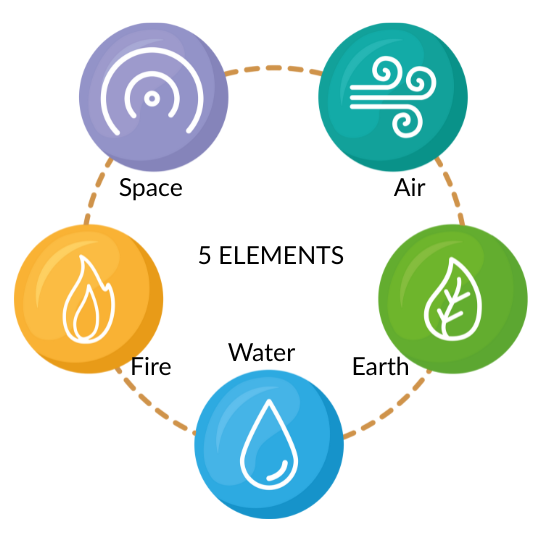
entire universe — including the human body — is composed of five elements (Pancha
Mahabhutas):
- Ether (Space) – subtlety and expansion
- Air –
movement
- Fire –
transformation
- Water –
cohesion
- Earth –
structure
These five elements combine
to form three functional energies known as the Tridoshas.
In Sanskrit:
- Tri =
three
- Dosha =
that which can become imbalanced
The ancient Rishis observed
that just as the external universe operates through elemental forces, the human
body functions through these same principles internally.
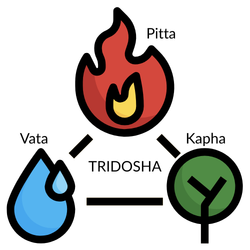
Vata Dosha (Air + Space)
Vata is the principle of
movement. It governs all motion in the body and mind.
Classical Reference
Charaka Samhita, Sutrasthana
12.8
वायु: पित्तं कफश्चेति त्रयो दोषाः समासतः।
विकृता विकृतिं यान्ति सम्यग् आरोग्यम् आवहन्ति॥
Transliteration:
Vāyuḥ pittaṁ kaphaś ceti trayo doṣāḥ samāsataḥ
Vikṛtā vikṛtiṁ yānti samyag ārogyam āvahanti
Meaning:
Vata, Pitta and Kapha are the three Doshas. When imbalanced they produce
disease; when balanced they sustain health.
(Vata is referred to here as
Vayu.)
Functions of Vata
Vata governs:
- Breathing and circulation
- Nervous system impulses
- Speech and sensory coordination
- Movement of muscles and joints
- Elimination of waste
- Menstruation and reproductive movement
It is dry, light, cold,
subtle, and mobile in quality.
Vata-Type Characteristics
- Lean body frame
- Dry skin, cold hands and feet
- Variable appetite
- Quick learner but forgetful
- Creative, imaginative, enthusiastic
- Tires easily despite bursts of energy
Signs of Vata Imbalance
- Anxiety, fear, restlessness
- Insomnia
- Constipation, bloating, gas
- Joint pain with cracking
- Dryness of skin and hair
- Irregular digestion
How to Balance Vata
Vata responds to warmth,
stability, nourishment, and routine.
At Home:
- Eat warm, cooked, slightly oily foods
- Maintain fixed meal and sleep times
- Self-oil massage (Abhyanga) with warm
sesame oil
- Gentle yoga and grounding pranayama
In Retreat/Hospital Setting:
- Abhyanga (synchronised oil massage)
- Shirodhara (steady oil stream over
forehead)
- Basti (medicated enema therapy — primary
Vata treatment)
- Swedana (therapeutic sweating)
Pitta Dosha (Fire + Water)
Pitta governs transformation
and metabolism. It is responsible for digestion, heat production, and
intelligence.
Classical Reference
Ashtanga Hridaya,
Sutrasthana 1.12
पित्तं तु अग्निस्वरूपं स्यात्।
Transliteration:
Pittaṁ tu agni-svarūpaṁ syāt
Meaning:
Pitta is of the nature of fire.
Functions of Pitta
- Digestion and metabolism
- Regulation of body temperature
- Skin complexion and blood coloration
- Hormonal and enzymatic activity
- Clarity of speech and intellect
- Courage and decisiveness
Its qualities are hot,
sharp, light, slightly oily, and intense.
Pitta-Type Characteristics
- Medium build, athletic frame
- Strong appetite and digestion
- Warm body temperature
- Sharp intellect
- Goal-oriented and ambitious
- Natural leadership tendencies
Signs of Pitta Imbalance
- Acidity and acid reflux
- Skin rashes, acne, inflammation
- Excess sweating with odor
- Irritability and anger
- Burning sensations
- Loose stools
How to Balance Pitta
Pitta requires cooling,
moderation, and emotional balance.
At Home:
- Favor cooling foods (coconut, cucumber,
leafy greens)
- Avoid excessive spice, sour and fried
foods
- Practice Sheetali or Sheetkari pranayama
- Spend time in nature, near water
In Retreat/Hospital Setting:
- Virechana (therapeutic purgation)
- Shirodhara with cooling oils
- Internal herbal formulations to regulate
Agni
- Structured detox with physician
supervision
Kapha Dosha (Earth + Water)
Kapha provides structure,
lubrication, and stability.
Classical Reference
Charaka Samhita, Sutrasthana
20.9
श्लेष्मा स्थैर्यबलवर्णकरः।
Transliteration:
Śleṣmā sthairya-bala-varṇa-karaḥ
Meaning:
Kapha (Shleshma) provides stability, strength, and complexion.
Functions of Kapha
- Structural integrity of tissues
- Lubrication of joints
- Immunity and endurance
- Emotional stability
- Growth and nourishment
Kapha is heavy, slow, cool,
steady, and moist.
Kapha-Type Characteristics
- Larger, sturdy body frame
- Thick, oily skin
- Slower metabolism
- Calm and patient temperament
- Loyal and compassionate
Signs of Kapha Imbalance
- Lethargy and sluggishness
- Weight gain
- Fluid retention
- Excess mucus
- Depression and emotional attachment
- Slow digestion
How to Balance Kapha
Kapha thrives on movement,
stimulation, and lightness.
At Home:
- Regular vigorous exercise
- Light, warm, spiced meals
- Avoid overeating and daytime naps
- Use warming spices like ginger and black
pepper
In Retreat/Hospital Setting:
- Udvartana (herbal powder massage)
- Swedana (steam therapy)
- Vamana (therapeutic emesis when
clinically indicated)
- Structured metabolic detox programs
Why Dosha Balance Matters for Health
Ayurveda teaches that
disease begins long before symptoms appear. It starts with subtle Dosha
disturbance (Vikriti).
When balanced:
- Digestion functions optimally
- Sleep is restorative
- Mind remains calm and clear
- Immunity stays strong
- Ageing is graceful
When disturbed:
- Emotional turbulence emerges
- Digestion weakens
- Toxins (Ama) accumulate
- Chronic disorders develop over time
Doshas and Emotional Wellness
The Doshas influence
psychological states:
- Vata imbalance → Anxiety, fear, overthinking
- Pitta imbalance → Anger, irritability, competitiveness
- Kapha imbalance → Attachment, depression, withdrawal
Ayurveda recognises that
mental clarity is inseparable from physical balance.
Conclusion: The Importance of Living in Dosha
Awareness
Balancing the Doshas is not
a one-time intervention — it is a daily discipline.
Simple daily practices can
maintain harmony:
- Eating according to constitution and
season
- Maintaining regular sleep cycles
- Practicing mindful breathing
- Avoiding overeating and emotional
suppression
- Aligning activity with natural rhythms
However, when symptoms
persist — chronic pain, metabolic disorders, sleep disturbance, hormonal
imbalance, emotional instability — deeper correction becomes necessary.
This is where
physician-guided Panchakarma or a structured Ayurveda retreat plays a vital
role. Intensive therapies help eliminate accumulated toxins, reset digestion (Agni),
calm the nervous system, and restore constitutional balance at a root level.
True Ayurveda does not treat
disease alone.
It restores alignment with nature.
And when Vata, Pitta, and
Kapha function in harmony, the body heals, the mind stabilises, and vitality
returns naturally.
Share this on


Our Popular Categories


Leave a comment